
Quick Summary: Improving indoor air quality relies on regular HVAC maintenance, including changing filters, cleaning coils, and inspecting ducts. Using high-efficiency filters like MERV 13 and adding portable HEPA units can help, especially in high-risk areas. Source control and proper ventilation are more effective than just system cleaning, and routine professional tune-ups are essential for optimal air quality.
If your office still feels dusty after a filter swap, or your restaurant holds odors with the unit running, the problem often sits inside airflow, filtration, and system hygiene. This guide tackles poor Indoor Air Quality with practical HVAC Maintenance Tips, smart filter checks, and when Air Duct Cleaning matters. You will get clear HVAC Maintenance Tips that fit homes and commercial spaces, backed by current best practice. Good HVAC Maintenance Tips help your system clean air, not just heat or cool it.
Why HVAC Maintenance Matters for Indoor Air Quality
How HVAC systems affect what people breathe
HVAC systems move, filter, and exhaust the air people breathe all day. When filters clog, coils get dirty, or airflow drops, dust, moisture, and other pollutants can build up and spread indoors. The EPA says good IAQ depends on source control, ventilation, and filtration working together, and HVAC systems support two of those three jobs according to EPA.
Why source control comes first
Cleaning the system helps, but it does not fix a pollution source by itself. The EPA says source control is usually the most effective way to improve indoor air quality in its IAQ guidance. Fix leaks, stop mold growth, vent kitchens and bathrooms, and reduce smoke, fumes, and dust first.
Also Read: Air Handler Unit Cleaning: Essential Tips for Commercial Buildings
The Maintenance Tasks That Make the Biggest IAQ Difference
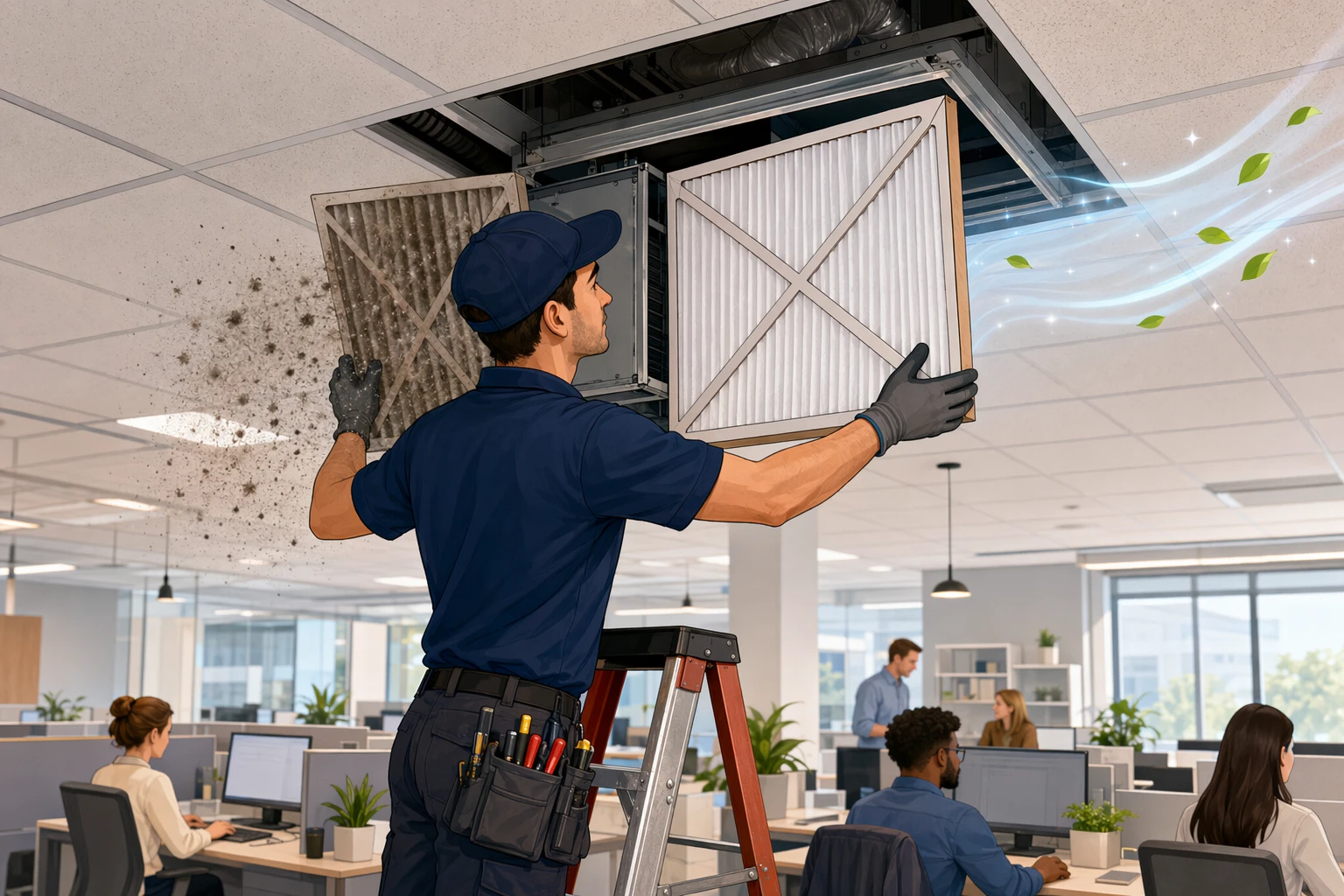
Three jobs matter most: use the right filter, keep wet HVAC parts clean, and inspect air paths for leaks or buildup. EPA says filtration helps improve indoor air quality, and it recommends at least MERV 13 when the system can handle it, with regular replacement in its home air cleaner guide.
- Replace filters with the right efficiency and fit
Pick the highest filter your system can handle, but make sure it fits tightly. Gaps let air bypass the media, so dust and pollen keep moving. Check the slot, frame, and change schedule, not just the MERV rating.
- Keep coils, drain pans, and housings clean
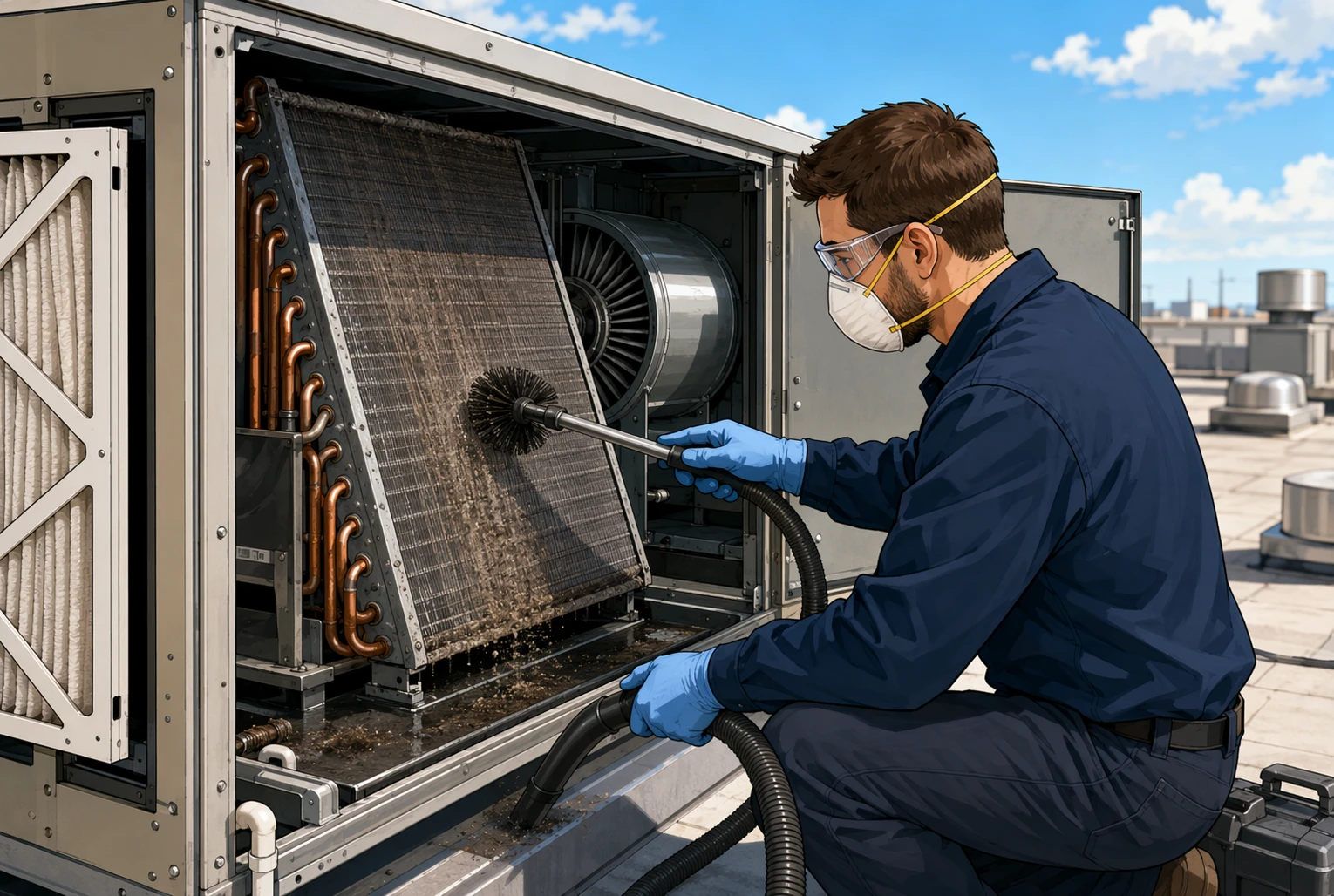
Dirty coils and wet pans can trap debris and support microbial growth. EPA reviews note that poorly maintained cooling coils and drip pans are common IAQ trouble spots in this critical review. Clear drains fast so standing water does not linger.
If you smell musty air near startup, inspect moisture sources first.
- Inspect ducts, returns, and air handler components
Do not assume routine duct cleaning is always needed. EPA says clean ducts as needed, especially for visible mold, vermin, or heavy debris. Focus on return leaks, loose insulation, dirty blowers, and blocked grilles before they spread contaminants.
Also Read: About Us | Alma Duct Cleaning Service
Choosing the Right Filtration and Air Cleaning Strategy
Start with the simplest fix. EPA says source control and ventilation come first, with filtration as a supplement, not a full replacement for either EPA guidance.
- When a better HVAC filter is enough
If your system can handle it, move to MERV 13 or the highest rated filter that fits well and does not choke airflow. This works best for whole-home or whole-building particle control, especially dust, pollen, and fine particles.
When portable HEPA air cleaners help
Use a portable HEPA unit when one room has higher risk, weak airflow, or heavy use. EPA recommends choosing a unit sized for the room, often by CADR, and notes portable cleaners are especially useful where ventilation is hard to improve EPA air cleaner advice.When to consider professional-grade supplements
Add UV-C, carbon, or in-duct air cleaning only when you have a clear issue like odors, VOCs, or infection control needs.Avoid ozone-generating devices in occupied spaces.
Also Read: Recent Advances in Indoor Air Quality Technologies
How Often to Maintain HVAC Systems and When to Call a Professional
Set a simple schedule and stick to it. ENERGY STAR says check filters monthly and have pre-season service done yearly, with cooling checked in spring and heating in fall ENERGY STAR maintenance checklist.
Routine schedules for homes and small buildings: Change or clean filters every 1 to 3 months. Clear debris around outdoor units. Book annual tune-ups, or twice a year for heat pumps.
Signs your system needs more than routine upkeep: Call a pro if rooms stay too hot or cold, bills rise, dust or humidity gets worse, or the unit needs frequent repairs EPA heating and cooling guide.
What a qualified contractor should do: Check controls, electrical connections, drain lines, coils, airflow, refrigerant, and combustion safety. > Ask for written findings and recommended next steps.

Ready to improve indoor air quality fast? Book certified duct cleaning and HVAC maintenance with ACS Alma Cleaning Services for cleaner, safer air across Michigan.
Frequently Asked Questions
Q1: What are the most effective HVAC maintenance strategies to improve indoor air quality?
Change filters on schedule, clean coils and drain lines, seal duct leaks, balance airflow, and book tune-ups twice a year. Control moisture too. Dust, mold risk, and stale air often start with poor upkeep.
Q2: How does regular HVAC system cleaning enhance indoor air health in U.S. homes and businesses?
Cleaning removes built-up dust, grease, pollen, and microbial growth from key parts. That helps systems move cleaner air, hold steady airflow, and reduce odors. In restaurants and busy offices, it also lowers strain on equipment.
Q3: Which HVAC filtration systems, like HEPA filters, are best for boosting indoor air quality?
Use the highest filter rating your system can handle without choking airflow. Many homes do well with MERV 11 to 13. HEPA works best in units built for it or in add-on air cleaners.
Conclusion
Better indoor air starts with steady HVAC care, tighter filter fit, cleaner ducts when needed, and smart add-ons. The EPA says source control, ventilation, and filtration are the core indoor air quality strategies, while CDC guidance supports regular maintenance and MERV-13 upgrades where possible for cleaner building air.