
Quick Summary: Restaurant HVAC coils collect a sticky grease and smoke film that vacuuming alone cannot remove, so they need wet cleaning with alkaline degreasers and low-pressure rinses rather than the acid products that can pit aluminum fins. A proper job also flushes the drain pan and line, covers electrical parts, and ends with measured airflow and a before-and-after look at the coil. This is separate from kitchen exhaust cleaning, which handles hoods and ducts for fire prevention, and grease-heavy kitchens should book coil cleaning quarterly. ACS Alma Cleaning Services provides wet coil cleaning across Michigan and documents each step so managers can confirm the coil is actually clean.
When kitchen air coats an HVAC coil in oily film, a dust-only cleaning won’t reach the grease packed between the fins. That’s where commercial coil cleaning comes in. This guide explains how commercial coil cleaning differs from hood and exhaust cleaning, what proper wet coil cleaning services should include, and how to spot a job done right.
Recognize When Restaurant Coil Buildup Calls for Wet Cleaning
Look for Adhered Film, Not Just Loose Dust
Kitchen air coats coils with a sticky layer of grease and smoke residue. Vacuuming alone will not move it. Wet cleaning is the right call when you see film that sticks to the fins, not just loose gray dust.
Run this quick check:
- The wipe test. Swipe a white cloth across an accessible coil. A greasy smear means the film needs water and cleaner.
- Look at the fins. Shiny, matted, or discolored fins point to bonded buildup.
- Watch performance. Weak airflow, warm supply air, or ice on the coils often follows heavy film.
- Smell the air. A rancid or smoky odor near vents signals grease on the coil.
When two or more signs show up, schedule professional commercial coil cleaning. Technicians use foaming agents and low-pressure rinses that dissolve grease without bending delicate fins. If your dining room feels stuffy even after kitchen exhaust service, the coils are likely the cause – not the hood.
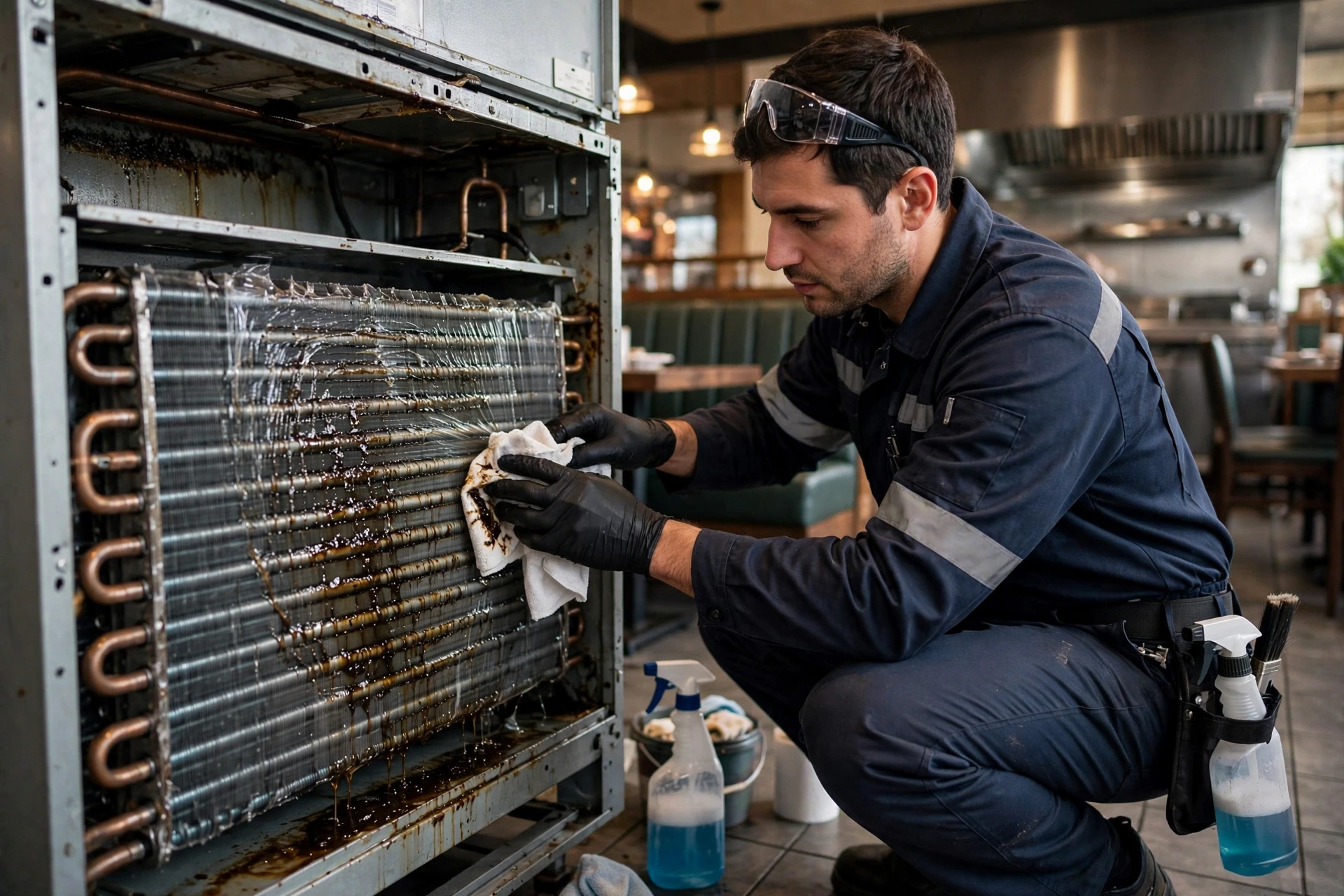
ACS Alma Cleaning Services offers wet coil cleaning across Michigan for exactly these situations.
Understand What a Careful Wet-Cleaning Service Includes
A quality wet cleaning is more than spraying a coil with a hose. Your contractor should protect the equipment, use the right product, and prove the job worked. Here is what to expect before anyone opens the air handler.
Check Product Compatibility and Water Control
Grease needs an alkaline cleaner; a harsh acid can pit aluminum fins and void warranties. Ask which product the technician plans to use and confirm it is safe for your coil metal. Watch for proper wet coil cleaning habits too: covered electrical parts, low-pressure rinse, and water routed away from motors and duct liner. A careless crew that floods the unit creates a bigger problem than the grease it removes.
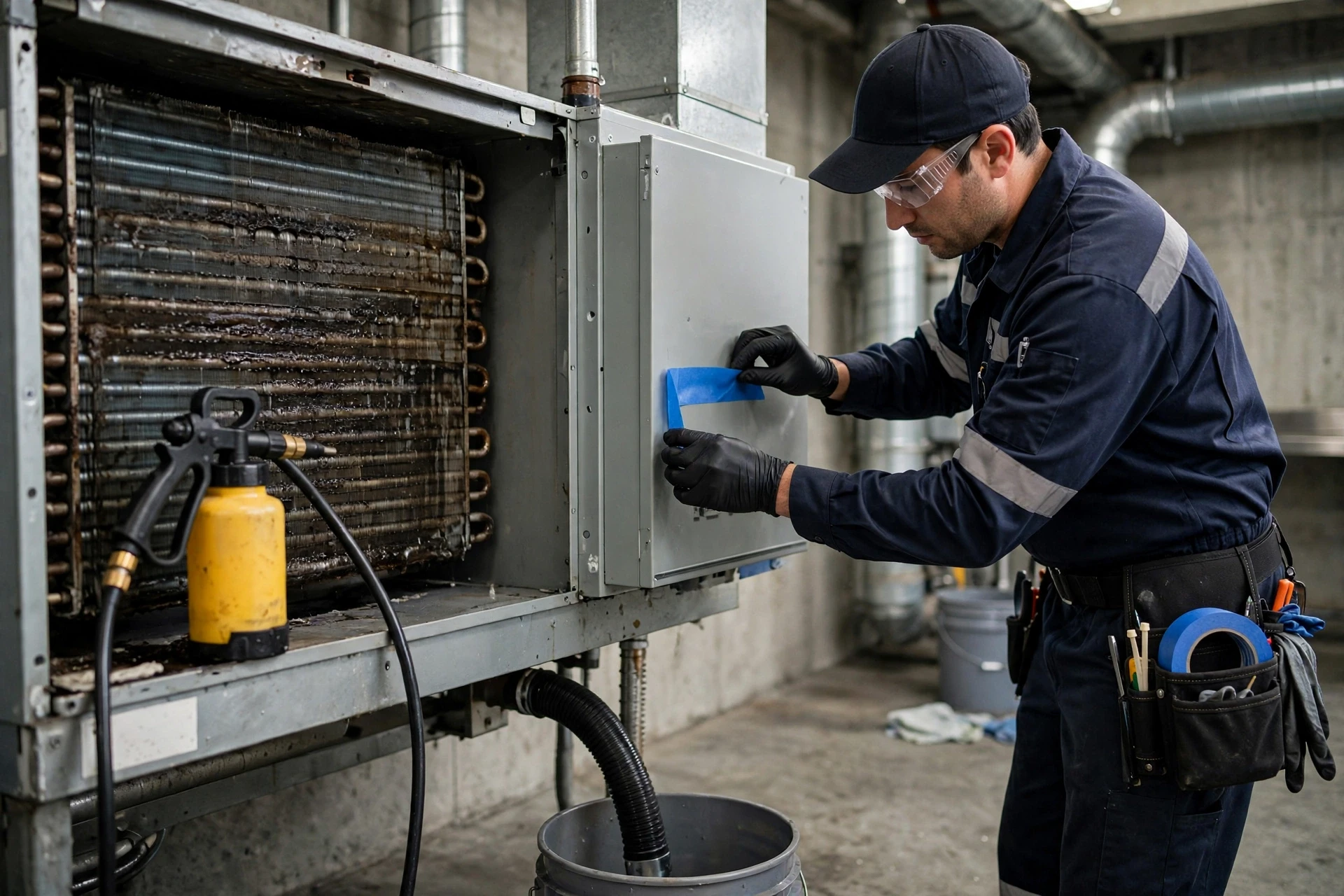
Include the Drain Pan and Post-Cleaning Check
The drain pan and line must be flushed too. In a greasy kitchen, sludge here causes overflows and mold fast. Before the crew leaves, ask for the check: airflow measured, coil fins straightened, drain flowing, and no standing water left behind. ACS Alma Cleaning Services documents these steps so you know the coil is clean, not just wet.
Tip: A crew that skips the drain pan check will leave you with water damage claims later.
Many managers assume one company handles both jobs. It does not work that way. Kitchen exhaust cleaning covers the hood, ducts, and fans above your cook line. It removes grease so a fire cannot start. HVAC coil cleaning treats a different system: the evaporator and condenser coils that cool your dining room and kitchen makeup air.
| Service | What It Cleans | Main Goal |
|---|---|---|
| Kitchen exhaust | Hoods, ducts, exhaust fans | Fire prevention |
| HVAC coil cleaning | Coils, drain pans, air handlers | Airflow, cooling, air quality |
Hire certified hood cleaners on their schedule, and book wet coil cleaning separately. Our wet coil cleaning process restores coils greasy air has coated.
A provider like ACS Alma Cleaning Services will show you the dirty coil, then the clean one. No proof, no payment.
Grease-coated coils cost you money every day. Book a wet coil cleaning with ACS Alma Cleaning Services and keep your kitchen HVAC running right.
Frequently Asked Questions
Q1: Best wet coil cleaning for restaurants and kitchens?
A professional wet coil clean uses non-toxic degreaser, pressure rinsing, and coil combing. Schedule it quarterly for grease-heavy kitchens.
Q2: How often should coils be cleaned?
Every three months. Smoke-heavy kitchens may need monthly checks.
Q3: Is kitchen exhaust cleaning the same thing?
No. Exhaust cleaning covers hoods and ducts; coil cleaning targets your HVAC unit.
Plan Coil Cleaning Around Your Kitchen
Grease coats coils fast, so restaurant HVAC needs wet coil cleaning on a tighter schedule than exhaust hood cleaning. Set a quarterly cadence, check for greasy film and weak airflow, and keep the two services separate so both actually get done.