Table of Contents
Quick Summary: In 2026, commercial duct cleaning focuses heavily on documentation, inspection proof, and compliance with new regulations. Buyers now demand clear records, photos, and videos from robotic inspections to verify work quality. Contractors must provide detailed scope notes and verification reports, shifting the industry toward evidence-based cleaning. This change aims to improve indoor air quality and reduce risks for property owners.
Commercial duct cleaning in 2026 is no longer about saying the job was done. Buyers now need records, inspection proof, and contractors who can meet Air Duct Regulations. That shift raises risk fast. Weak paperwork, missed checks, or bad vendors can hurt Indoor Air Quality, trigger claims, and stall bids. This piece breaks down the 2026 Air Duct Regulations, key HVAC Maintenance Tips, and how robotic inspection and Air Duct Regulations now define a defensible cleaning job.
What Changed in 2026 for Commercial Duct Cleaning
2026 shifted the buying standard. Cleaning itself is not the only question now. Buyers want proof, scope, and post-job verification. See the parent pillar post for the full 2026 market picture.
Why Documentation Now Matters More
Property teams now ask for:
- inspection photos
- scope notes by system area
- cleanliness verification
- post-project reports
NADCA’s commercial checklist already points buyers toward drawings, IAQ reports, inspection steps, and post-project reporting, so documentation is becoming part of a normal bid review, not an extra NADCA commercial cleaning checklist. NIH also notes duct cleaning should follow confirmed contamination, source control, and occupant protection, which pushes vendors to document why work is needed NIH duct cleaning fact sheet.
How ASHRAE and NADCA Fit Together
Use them together:
- ASHRAE helps define inspection and maintenance expectations.
- NADCA guides how cleaning and verification should happen.
ASHRAE is not law by itself unless your local code adopts it, but many owners still use it to set maintenance rules.
That means 2026 buyers compare contractors on records, not just price. ACS Alma Cleaning Services fits this shift best when it provides clear inspection evidence before and after work.
Why Robotic Inspection Is Becoming the New Baseline
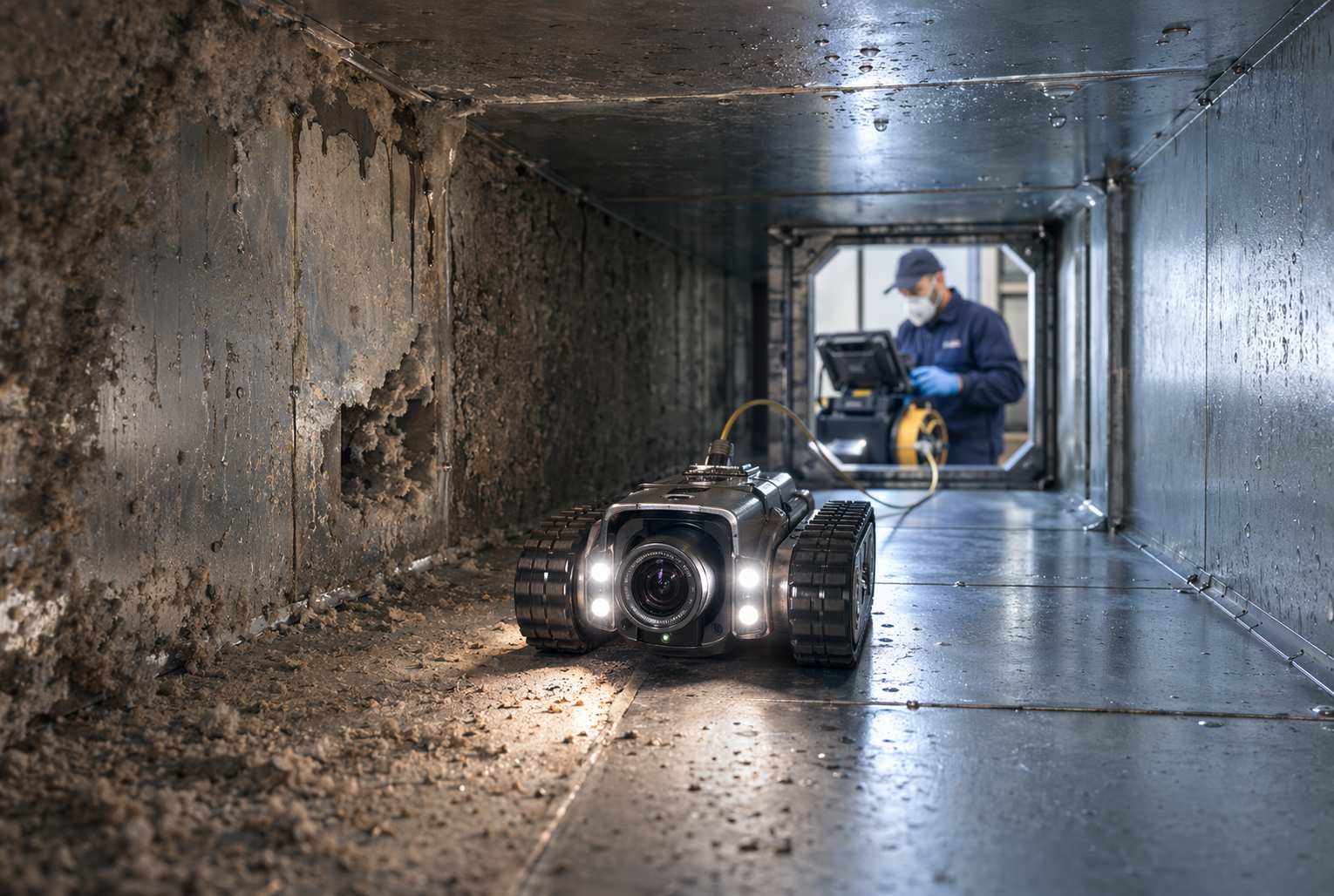
Robotic inspection is turning into the baseline because buyers now expect proof, not just a verbal report. NIH guidance says ductwork should be visually inspected at regular intervals, and NADCA notes robots improve inspection detail, safety, and documentation through cameras and sensors NIH duct cleaning fact sheet NADCA on robotics.
What Robotic Systems Do Better
- Reach long, tight, dark duct runs people cannot safely enter
- Record pre-cleaning and post-cleaning video
- Spot buildup, damage, and moisture faster
- Reduce guesswork during bids and scope reviews
If a contractor cannot show interior footage, you are buying trust, not verification.
How Robots Change the Cleaning Scope
- They tighten the scope before work starts.
- They show which sections need cleaning, repair, or both.
- They create a file for vendors, insurers, and compliance records.
That shifts jobs from broad estimates to evidence-based proposals. For commercial owners, that usually means fewer surprises, cleaner change orders, and stronger closeout records.
What Property Managers and Owners Should Ask Contractors Now
Ask for proof, not promises. Use these questions to separate real compliance from sales talk:
- What exact areas are in scope – supply, return, coils, blower, diffusers?
- How will you document findings – photos, video, inspection notes, post-clean verification?
- What standard are you following – and where can I see it in the proposal?
- How will you control the source if there is moisture, mold, or debris?
The NIH says cleaning makes sense in specific cases like water damage, microbial growth, airflow blockage, or dust discharge, and the source must be fixed first, per its HVAC duct cleaning fact sheet.
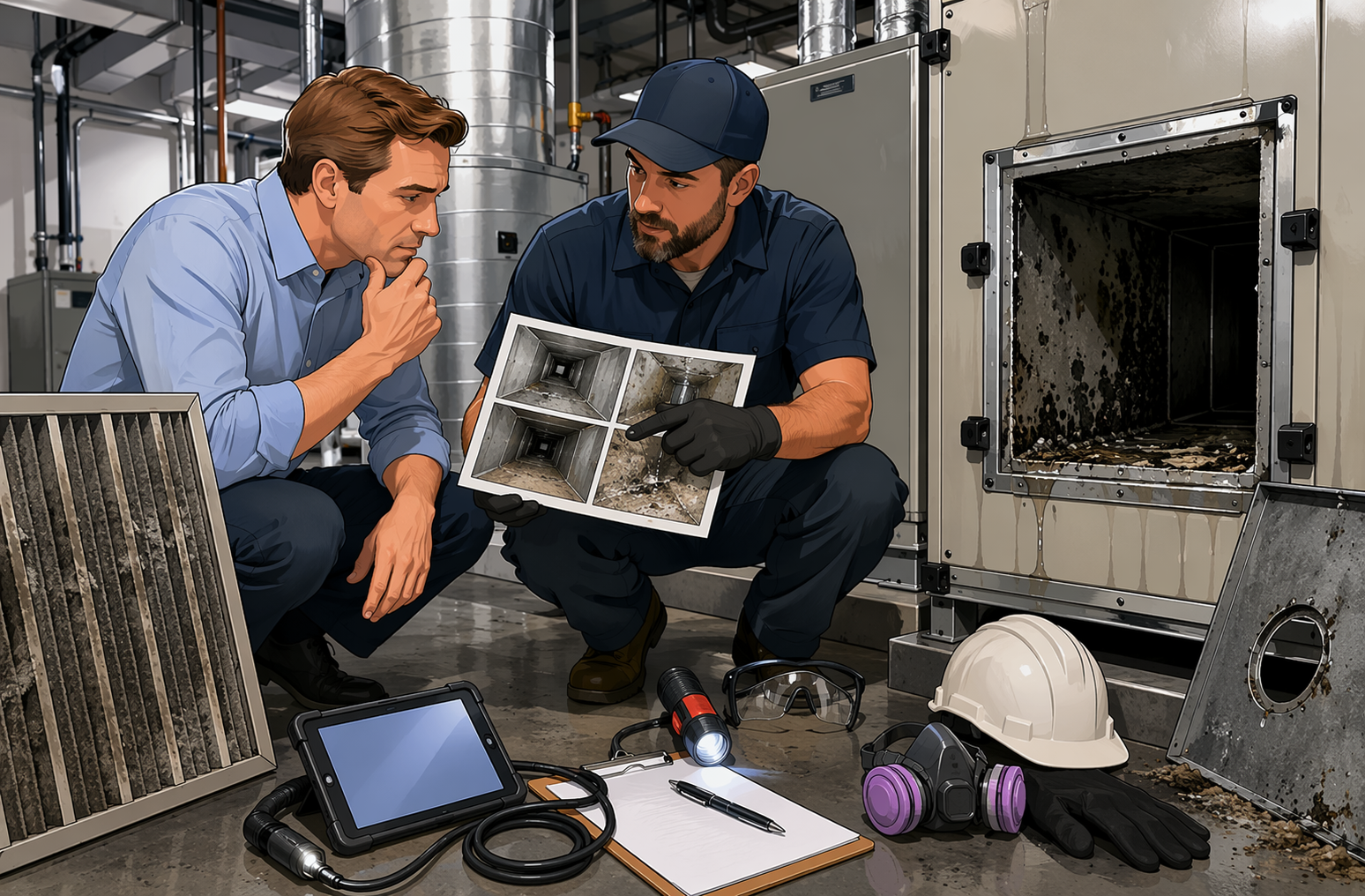
IAQ is now part of risk control, not just comfort. The EPA says indoor air affects health, comfort, and productivity, and managers should build IAQ into purchasing and maintenance decisions in its office IAQ guide.
If a contractor cannot show documentation, containment steps, and a clear fix plan, keep shopping.
How This Fits Into Current Standards and Guidance
The Standards Stack Behind the Headlines
Commercial duct cleaning now sits inside a stack of guidance, not one rule. At the top, local code and fire rules win. Below that, facility teams lean on NADCA ACR for inspection, cleaning, and proof of cleanliness, while the NIH fact sheet says cleaning makes sense when you have water damage, visible growth, airflow blockage, or debris blowing from diffusers, not as a blind routine NIH duct cleaning guidance. The current NADCA ACR standard also stresses staying current with new methods and documenting results.
For buyers, that means inspection records now matter almost as much as the cleaning itself.
Need documented duct cleaning and better inspection proof in 2026? Contact ACS Alma Cleaning Services for compliant commercial cleaning, HVAC maintenance, and clear service records across Michigan.
Frequently Asked Questions
Q1: What are the latest technological advancements influencing commercial air duct cleaning in 2026?
Robotic cameras, AI-assisted defect tagging, and better negative air systems now give clearer proof of duct condition before and after cleaning.
Q2: How do new industry regulations in 2026 impact commercial air duct cleaning standards?
Rules now push harder on written records, inspection proof, filter tracking, and cleaner maintenance logs for commercial buildings.
Q3: What are the benefits of using robotic inspection and cleaning systems for commercial ducts?
Robotic systems reach tight runs, reduce guesswork, support better bids, and give property managers visual proof for vendors, tenants, and compliance files.
Conclusion
In 2026, commercial air duct cleaning is less about routine cleaning and more about proof. Strong records, clear inspection scope, and IAQ plans now matter most, backed by EPA building guidance and evolving HVAC robotics research.