
Quick Summary: Choose coil cleaning based on the actual dirt, not a fixed schedule. Dry cleaning with brushes or vacuums handles light dust, while wet cleaning with water and coil-safe cleaner is needed for grease, sticky film, mold, or heavy buildup. Most pros combine both, starting with dry removal then wet rinsing, and indoor evaporator coils need careful runoff control unlike outdoor condensers. ACS Alma Cleaning Services matches the method to the coil’s condition and offers free inspections across Michigan.
Dusty coil? Dry cleaning may be enough. But grime packed between the fins or a greasy film usually calls for wet coil cleaning services. Coil cleaning should match the soil, not just the intensity. Here we compare what each method removes, where wet cleaning needs extra care, and how to know when to have a technician inspect your coil.
Wet vs. Dry Coil Cleaning: At a Glance
| Dry HVAC coil cleaning | Wet HVAC coil cleaning | |
|---|---|---|
| Best suited for | Loose dust and surface debris | Grime or residue that remains after dry removal |
| Cleaning action | Physical removal without rinse water | Loosens and rinses contamination from the coil |
| When it may be enough | Light, loose contamination that comes away on inspection | When visible buildup needs moisture or cleaner to release |
| Main limitation | May not remove adherent film or embedded grime | Requires suitable access and control of water and runoff |
| Key precautions | Use gentle tools and avoid bending delicate fins | Follow coil-maker guidance, protect components, and verify drainage |
How Dry HVAC Coil Cleaning and Wet HVAC Coil Cleaning Compare
Dry HVAC coil cleaning
Dry cleaning removes loose coil debris with gentle brushing, vacuuming, or controlled air. It works best for light dust and surface buildup that comes away easily during inspection. Its limit: adherent film and embedded grime usually stay put, so techs must use soft tools and protect delicate fins.
Wet HVAC coil cleaning
Wet cleaning applies water, and where suitable a coil-safe cleaner, to loosen and flush what dry methods leave behind. It suits coils with sticky residue or visible buildup that needs moisture to release. It demands careful access, runoff control, and protected components with verified drainage.
What Dry and Wet Coil Cleaning Actually Do
Dry coil cleaning uses brushes, air whips, and vacuums. It lifts loose dust, lint, and surface buildup without water. It works well for light debris and for areas where moisture could cause problems.
Wet coil cleaning adds a cleaning solution and a rinse. The liquid breaks down sticky grime like grease, smoke film, and mold that dry methods leave behind. It flushes residue out of the thin metal fins where air passes through.
The two methods are not rivals. On a dirty evaporator coil inside your air handler, a pro will often dry-vacuum first, then wet rinse. Your condenser coil outside usually needs a wet wash because it collects dirt, grass, and pollen.
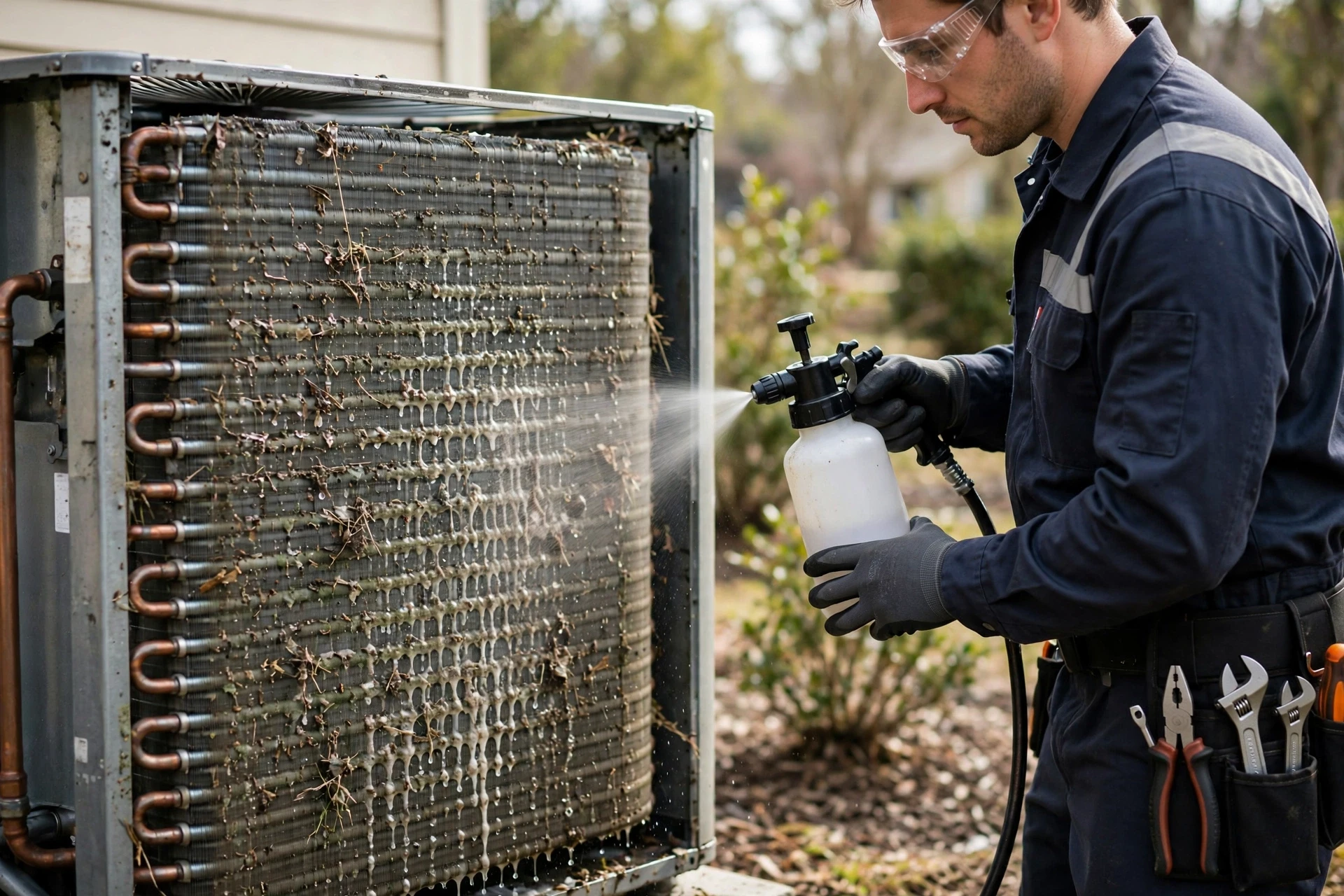
At ACS Alma Cleaning Services, we match the method to the coil’s actual condition.
Also Read: Enhance Indoor Air Quality with Proven HVAC Maintenance Strategies
When Is Dry Cleaning Enough, and When Is Wet Cleaning Needed?
Start With the Coil Condition, Not a Fixed Schedule
Look at the coil before picking a method. Light dust on the fins brushes or vacuums off with dry cleaning. Grease, sticky grime, or a mat of dirt needs wet coil cleaning with a rinse or foam. A quick flashlight check tells you which one applies. If water beads up and rolls off with residue behind, plan on a wet wash.
Evaporator and Condenser Coils Have Different Constraints
Indoor evaporator coils sit above furnaces or air handlers, so heavy wetting risks water where it does not belong. Techs contain the rinse with pans, covers, and a wet vacuum. Outdoor condenser coils drain freely, so a full-pressure rinse is safer. Michigan kitchens and restaurants usually need wet cleaning on both, since grease bonds to fins and dry methods just move it around.
Also Read: Air Handler Unit Cleaning: Essential Tips for Commercial Buildings
Which Should You Choose: Wet or Dry Coil Cleaning?
Let your coil’s condition decide. Dry cleaning works for light dust and loose debris on both evaporator and condenser coils. Wet cleaning is the better pick when you see grease, sticky residue, mold, or heavy buildup.
| Coil Condition | Best Method |
|---|---|
| Light dust, loose dirt | Dry cleaning |
| Grease, grime, sticky film | Wet cleaning |
| Mold or musty odor | Wet cleaning with safe treatment |
Most professional jobs combine both: vacuum and brush first, then rinse or foam as needed. A technician from ACS Alma Cleaning Services can inspect your coils and recommend the right mix for your system and budget.
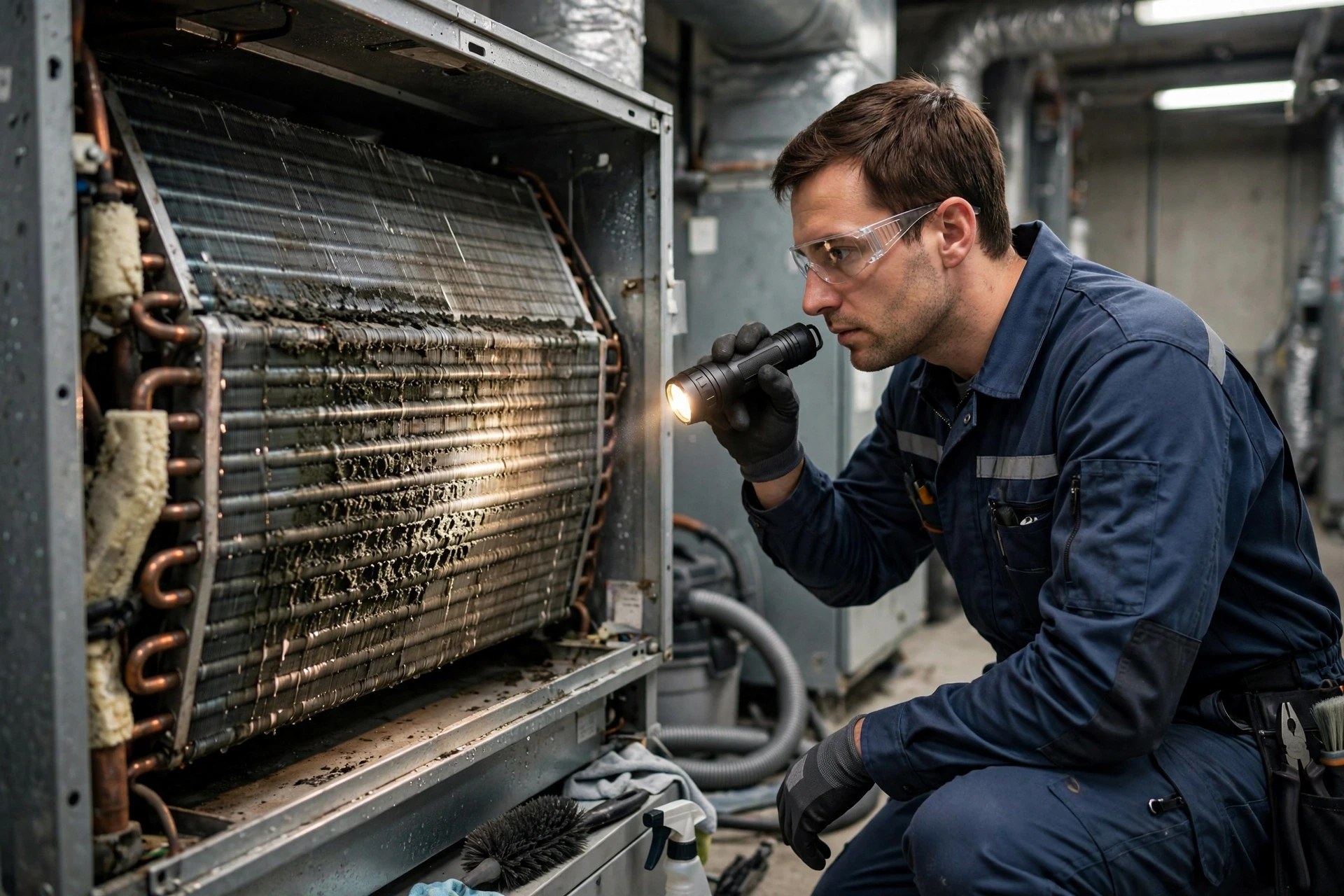

Not sure whether your coils need wet cleaning, dry cleaning, or both? Let ACS Alma Cleaning Services inspect and recommend the right method. Schedule your free assessment at ACS Alma Cleaning Services today.
Frequently Asked Questions
Q1: What is the difference between wet coil cleaning and dry coil cleaning?
Dry cleaning uses brushes and vacuums for dust. Wet cleaning uses water and coil cleaner to remove grease and sticky film.
Q2: Is dry cleaning enough for HVAC coils or is wet cleaning necessary?
Light dust needs only dry cleaning. Grease, mold, or heavy buildup requires wet cleaning. Most pros combine both.
Q3: What are the benefits of wet cleaning evaporator and condenser coils?
Better airflow, lower energy bills, improved cooling, and healthier air. ACS Alma Cleaning Services offers both methods across Michigan.
Make the Choice That Fits the Coil
Match the method to the coil: dry cleaning removes light dust, wet cleaning cuts grease and heavy buildup, and most professionals combine both for the best result.